
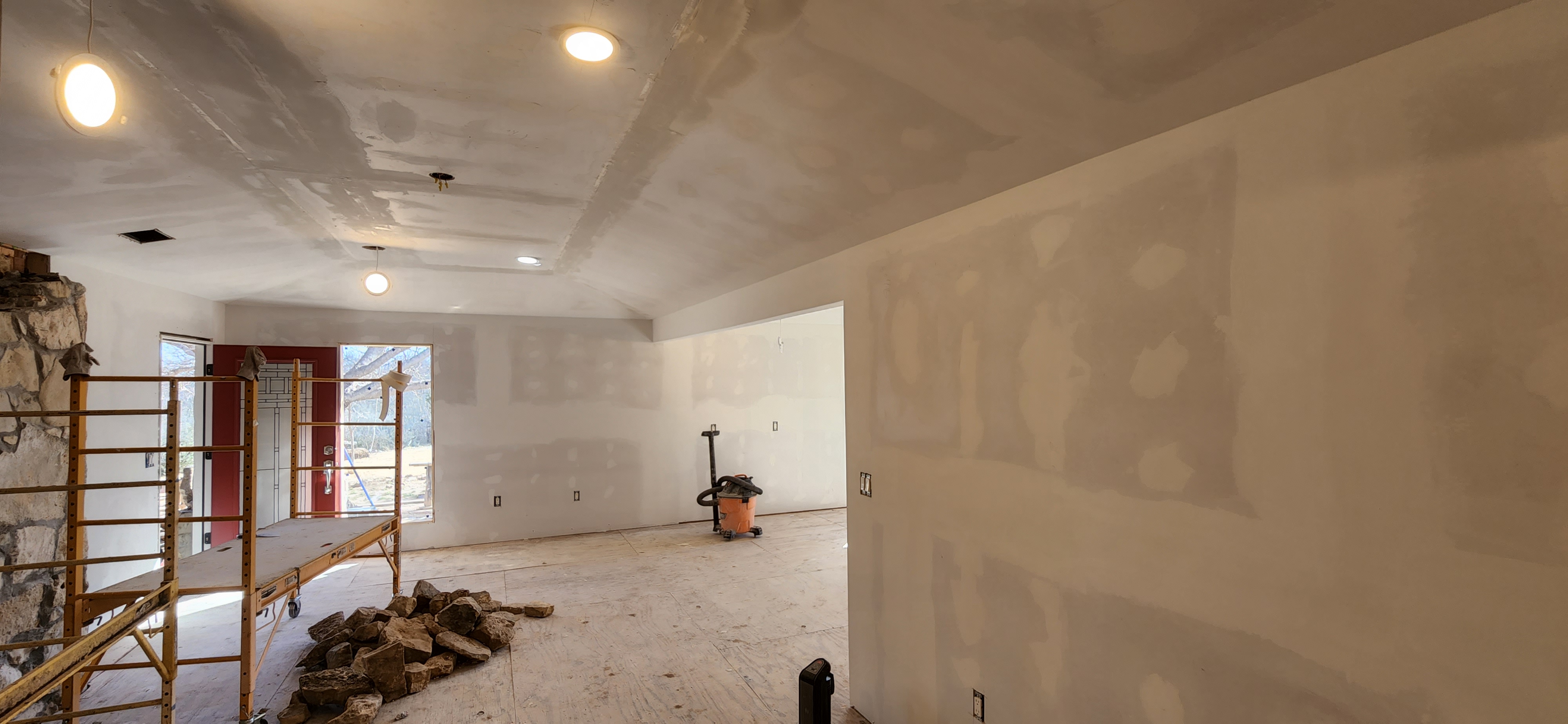
Stage 01
Framing and structure
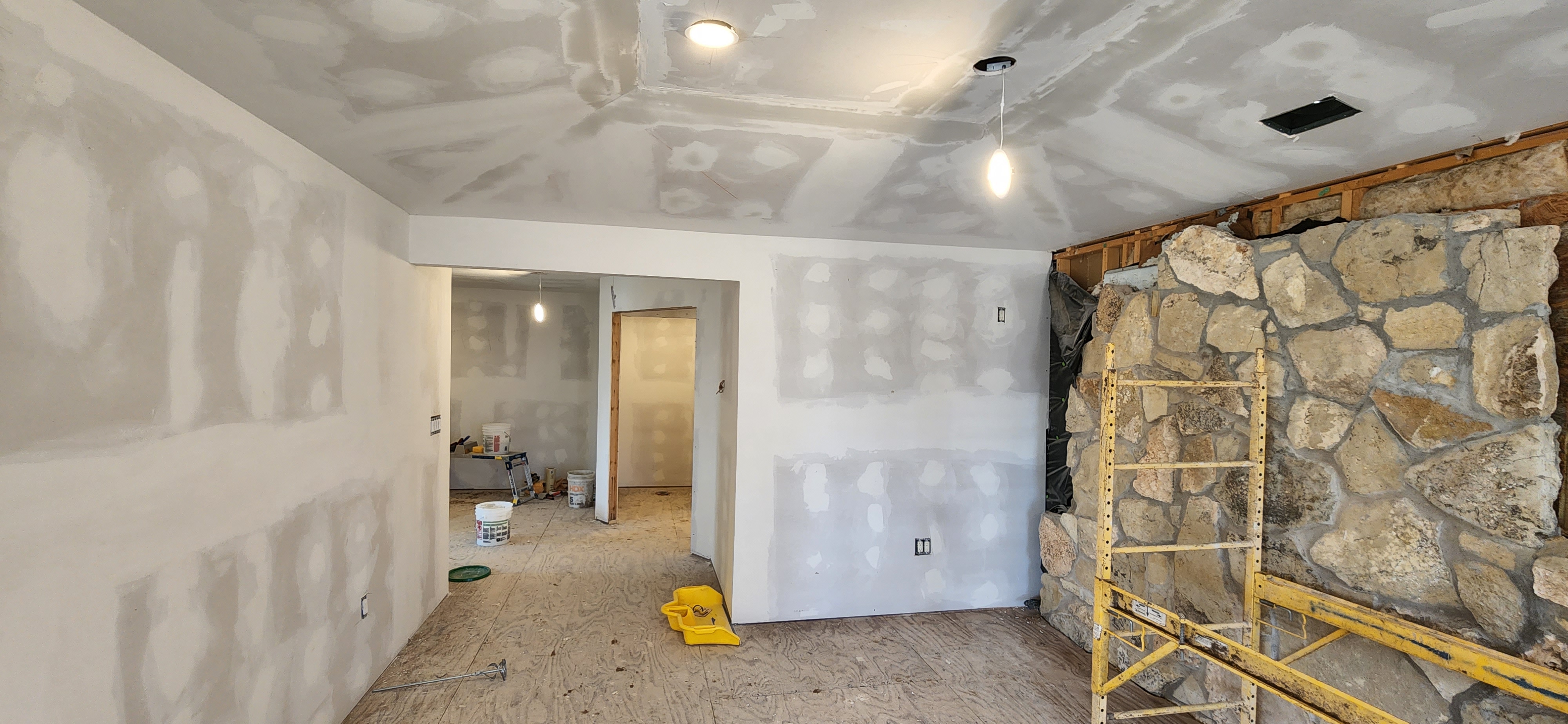
Open walls, corrected studs, new openings. This is where out-of-square gets found and fixed — or covered up.
Why we shoot the ugly stage
Every remodeler has a photo of a finished kitchen. Almost none will show you the week it was a mess. That gap is the entire reason this page exists.
Yellow Rose Construction photographs the rough-in stage of every job — framing, waterproofing, subfloor and plumbing — and publishes it. A finished photo proves someone owns a camera. A photo of correctly installed cement backer board proves the shower will not fail in year six. We show the stage where workmanship is still visible.
A finished room is a photograph of a decision that has already been covered up. It cannot tell you what is behind it.
Two bathrooms can be finished on the same day, look identical in a listing photo, and behave completely differently in five years. One had cement backer board, a sloped pan and treated seams. The other had moisture-resistant drywall and a prayer. Both look great on Instagram.
The difference is not visible in the finished picture because the finished picture is precisely the moment when the difference stops being visible. That is not an accident of photography. It is the reason finished photos are the only thing most portfolios contain.
Ask for the week-three photo. If a contractor cannot produce one from a recent job, they either do not document their work or do not want you to see it.
This is a simple test and almost nobody runs it. When you are collecting three bids for a bathroom, ask each contractor one question: "Can you show me a photo of the shower before the tile went on?"
One of them will have it. The rest will send you a picture of the finished room, which is the answer to a different question.
Every project gets the same five records, because those are the five places a remodel fails quietly.
Open walls, corrected studs, new openings. This is where out-of-square gets found and fixed — or covered up.
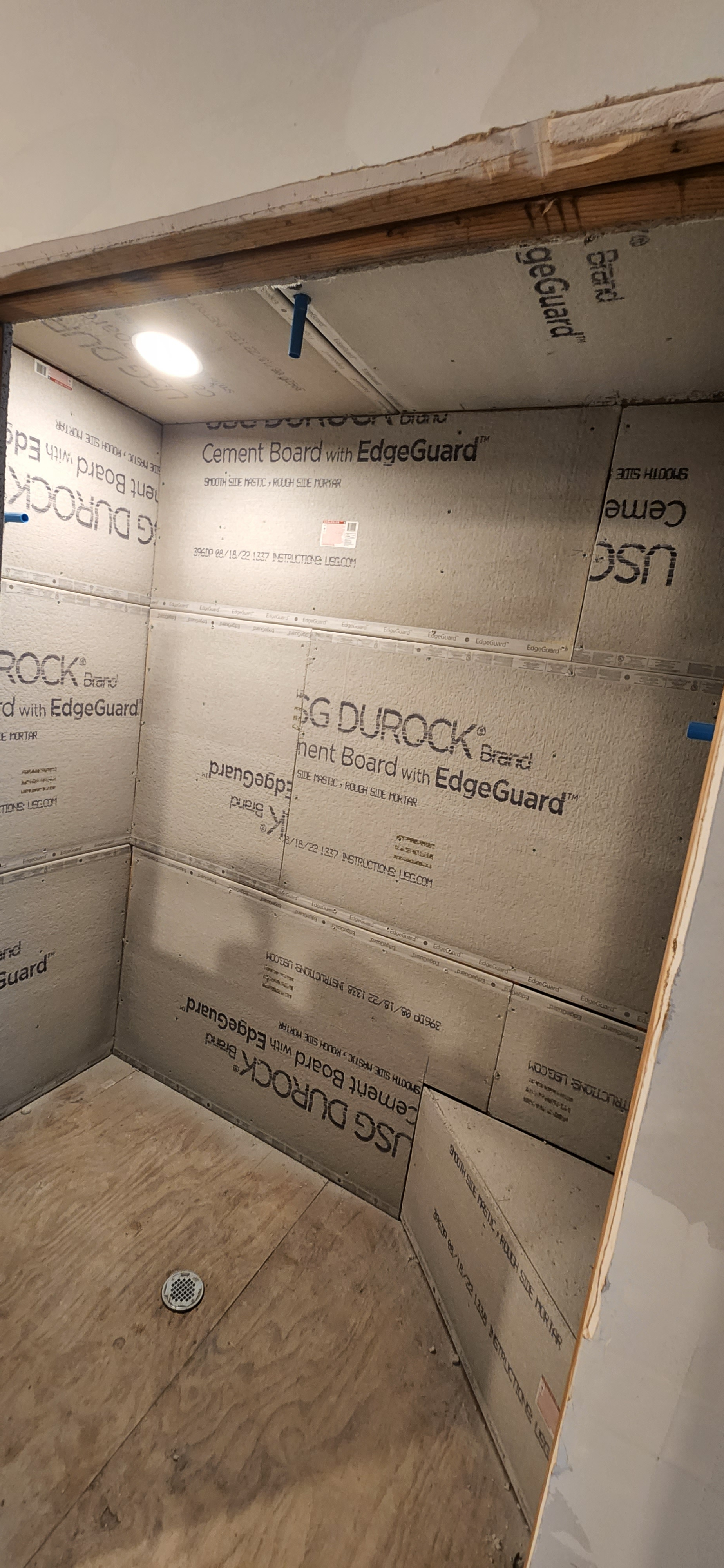
Cement board, seams, corners and pan. The single most important layer in any bathroom, and the one nobody posts.
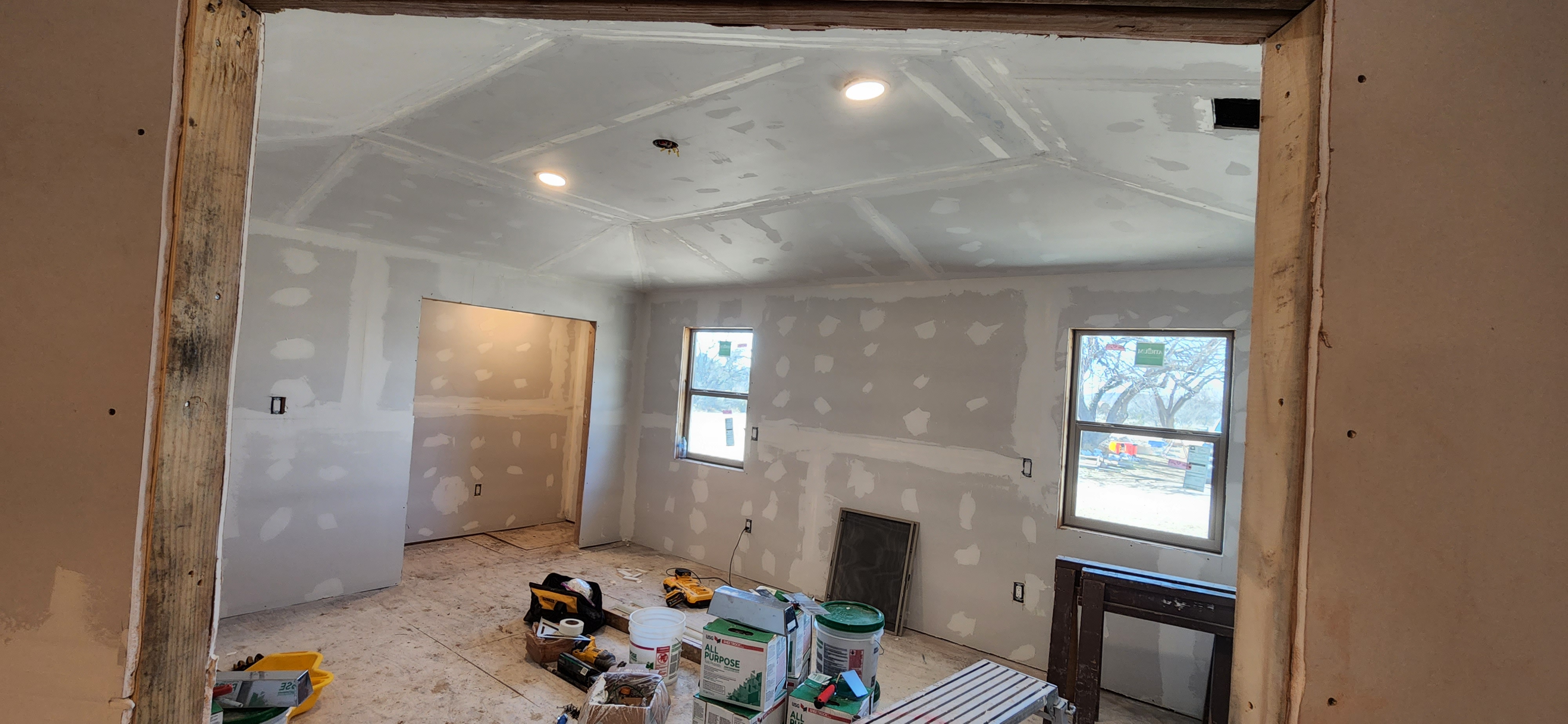
Plumbing, electrical and venting inside the wall. Neat, supported and set at consistent heights before it disappears.
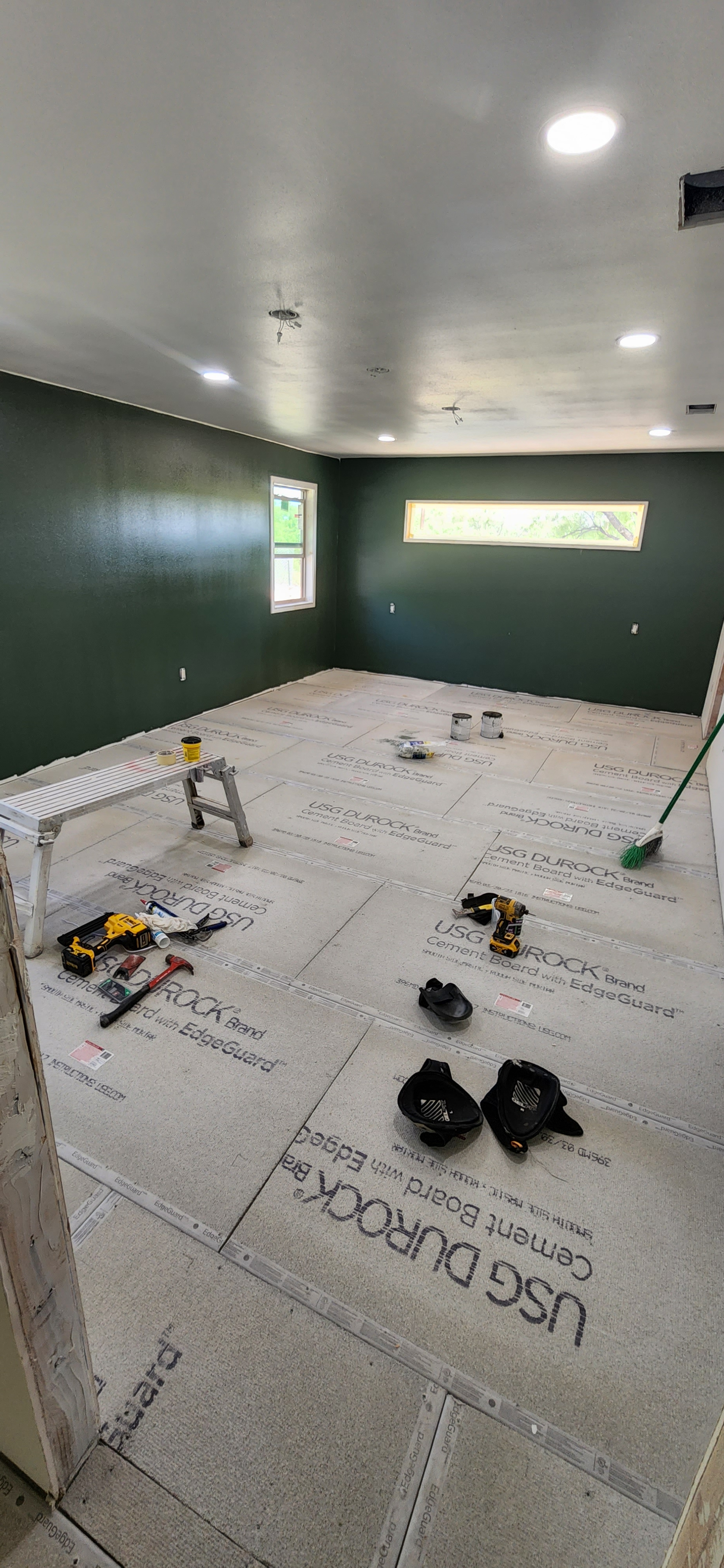
What got pulled, what got replaced, and what the new surface is sitting on. This is where cheap jobs get expensive later.
The fifth record is the finished room — after the punch walk, with the same camera. It is the least useful of the five photographs, which is exactly why it should not be the only one you are shown.
Seven details separate a real rough-in from a staged one — and you do not need to be a builder to check them.
Cement board is grey and printed. Moisture-resistant drywall is green or purple. In a shower, on a floor that gets wet, or behind tile, the grey board is the tell.
Board joints and inside corners should be taped and coated before tile. Untreated joints are where movement turns into a crack two winters later.
Look for sistered studs, shims, new plates and straight lines where the old wall was bowed. A rough-in with no corrections on a fifty-year-old house is suspicious, not impressive.
New plywood or backer where the old floor was wet or soft. Patching over a soft spot is the cheapest way to make a floor feel solid for about eighteen months.
Drain lines should run straight with proper slope, supported with hangers rather than zip-tied to whatever was nearby. Supply lines should be secured, not dangling.
Outlets and switches lined up across a room is a small thing that signals someone was paying attention. Boxes at three different heights signal the opposite.
Ask who took it and which job it came from. Manufacturer marketing photos and stock images are easy to spot once you ask, and a real rough-in photo comes with a story about what went wrong.
What we find
On an older San Angelo home, the demo almost always finds something the estimate could not see. The only honest question is what happens when it does.
We have found walls out of square by an inch every foot. Water-damaged subfloor under a water heater that had been leaking long before anyone called. Mold behind tile from a supply line that had been weeping for years. Roofs with flat sections that were always going to leak.
None of that is unusual. What is unusual is photographing it, pricing it separately, and showing the homeowner before it gets covered back up.
Use this on anyone
These work on a kitchen, a bathroom, a roof or an insurance rebuild. Print them if it helps.
Not a finished photo — a rough-in photo. If they can produce one from a recent job, they document their work. If they cannot, ask why. This single question filters harder than any review score.
If the answer is "a project manager will be in touch," find out who actually swings the hammer and who answers the phone at 4pm on a Friday. On our jobs, it is Dillon.
You want a process answer, not a reassurance. Stop, document, price separately, get a decision. Any contractor who says "we'll just handle it" is telling you the change order will arrive at the end.
Every quote excludes something. The honest contractor tells you what, up front. The expensive one lets you find out in week five.
Every real contractor has one. The answer tells you how they handle the part of the job that does not go to plan — which is the only part that matters when it happens to you.
The short version
We are not asking you to take our word for the work. We are asking you to look at the stage where the work is still visible — ours and everyone else's.
Free walkthrough within 50 miles of San Angelo. Bring the questions above — we will answer them the same way on your job.